
 By Bruno Lionel
Introduction: More Than Just Cards on a Table
In an age where digital entertainment has become ubiquitous, the humble deck of playing cards continues to hold its own as one of humanity’s most enduring sources of amusement, competition, and connection. Card games are far more than casual diversions; they are cultural artefacts, social lubricants, and exercises in psychology and probability. Whether played in the hush of a family living room, the smoky air of a backroom poker game, or the bright lights of a casino, card games invite us into a shared ritual that blends chance, skill, and the thrill of human interaction.
A Brief History: Cards Through the Centuries
It is believed that playing cards originated in Imperial China, around the Tang dynasty, before spreading westward along the Silk Road. By the 14th century, cards had arrived in Europe, evolving rapidly to suit local tastes and customs. Early decks were often hand-painted luxuries for the wealthy, but the invention of the printing press democratized card games for people from every walk of life.
As they spread, card games adapted to new cultures. French suits—hearts, diamonds, clubs, and spades—became the modern standard, while Italy and Spain developed their own unique decks. Over time, an astonishing variety of games emerged, from solitary pastimes to grand tournaments that attract global attention.
The Magic Within a Deck
A single deck of cards is deceptively simple: fifty-two pieces of cardstock, yet nearly infinite possibilities. This balance of simplicity and complexity is part of the enduring appeal. Within its tight constraints, players discover strategy, bluffing, alliances, betrayals, and that ever-present element of chance that can turn the tide in an instant.
Popular Card Games and Their Unique Charms
Poker: The Game of Wits
No game better illustrates the psychological depth of card play than poker. Its countless variations—from Texas Hold’em to Omaha—are united by the same principles: risk, bluffing, and reading people as much as the cards themselves. Poker tournaments have become televised spectacles where the drama hinges on subtle gestures and steely nerve.
Bridge: The Social Strategist’s Playground
Bridge is another titan among card games. Played in partnerships, it demands memorisation, communication, and collaboration. Competitive bridge leagues flourish worldwide, with devoted players gathering weekly for the mental exercise and social camaraderie the game encourages.
Blackjack: The House and the Odds
Blackjack reigns supreme in casinos, thanks to its elegant balance between luck and simple arithmetic. Players can learn the basics quickly, yet the game’s deeper strategies—like card counting—have achieved legendary status in gambling folklore.
Rummy: The Family Favourite
Rummy’s enduring popularity comes from its versatility. It’s easy to learn, quick to play, and endlessly adaptable to house rules. For many, it’s the first card game learned at the kitchen table, a gateway into the wider world of cards.
Solitaire: A Quiet Conversation With Chance
Not all card games are social. Solitaire—known by countless names and variations—is the classic solitary diversion. It offers a private, meditative challenge that can soothe or frustrate in equal measure, perfect for quiet moments alone.
What Makes Card Games Endure?
1. Portability and Accessibility
A deck of cards is cheap, portable, and requires no electricity, special equipment, or elaborate setup. You can play at a campsite, a train station, or a bustling cafe.
2. Infinite Variation
The same deck supports hundreds of distinct games. With a few tweaks, families invent their own versions and pass them down like heirlooms.
3. Balance of Skill and Luck
Card games strike a unique balance. Luck means a beginner can win against a seasoned player, but skill ensures mastery is always worth pursuing.
4. Social Ritual
Above all, card games are social. They bring people together—friends, family, strangers—over laughter, competition, and conversation. A card game is often an excuse for deeper connection.
The Modern Evolution: Card Games in the Digital Age
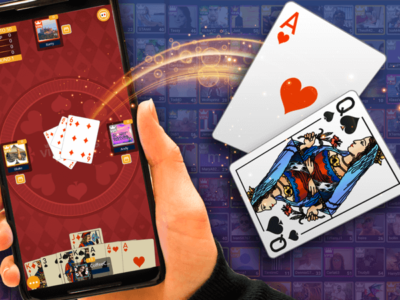
Far from disappearing, card games have found new life online. Digital poker rooms, mobile solitaire apps, and competitive collectible card games like Magic: The Gathering and Hearthstone have created vast communities. Players can test their skills against others across the world without ever leaving home.
Yet, even with this high-tech evolution, physical cards retain their charm. There’s something irreplaceable about the shuffle of a deck, the subtle tension as a hand is revealed, the camaraderie around a real table that no virtual avatar can fully replicate.
Tips for Enjoying Card Games to the Fullest
Learn the Rules, Then Break Them
Master the basics first. Once you know a game inside out, experiment with variations or house rules to keep things fresh.
Play for the Company, Not Just the Win
Winning feels good, but card games are best when they bring people together. Focus on the laughs, the stories, and the moments in between hands.
Keep It Friendly, Even When Stakes Are Real
If gambling is involved, play responsibly. Know your limits and remember that the goal is entertainment, not financial windfalls.
Pass It On
Teach a favourite game to a friend or child. Passing on the tradition is part of what keeps card games alive for the next generation.
Conclusion: A Ritual That Endures
In the end, the humble deck of cards is a testament to our desire for play, challenge, and connection. From royal courts to family kitchens, backroom poker dens to televised championships, card games remind us that even the simplest tools can create worlds of endless possibility. They are proof that what matters most is not the cards in your hand, but how you play them—and who plays alongside you.
So the next time you crack open a deck, take a moment to appreciate the centuries of laughter, strategy, rivalry, and community held within those fifty-two rectangles of cardboard. There is magic there—timeless, adaptable, and always waiting for the next shuffle.