
 By Bruno Lionel
Card games have served as a cornerstone of human leisure for centuries, transcending cultures, generations, and technological shifts. From physical decks of cards shuffled on a wooden kitchen table to digital screens displaying virtual tables, the medium remains universally captivating. Yet, human preference is sharply divided when it comes to the format of play. Some individuals find absolute peace in the quiet concentration of a solitary game like Klondike solitaire or FreeCell, while others thrive exclusively on the social electricity, psychological warfare, and strategic depth of multiplayer card games like poker, bridge, or collectible trading card games. Exploring the psychological profiles, cognitive demands, and emotional rewards behind these distinct preferences reveals why solitary and multiplayer card games attract fundamentally different types of minds.
The Psychology of Solitary Card Play
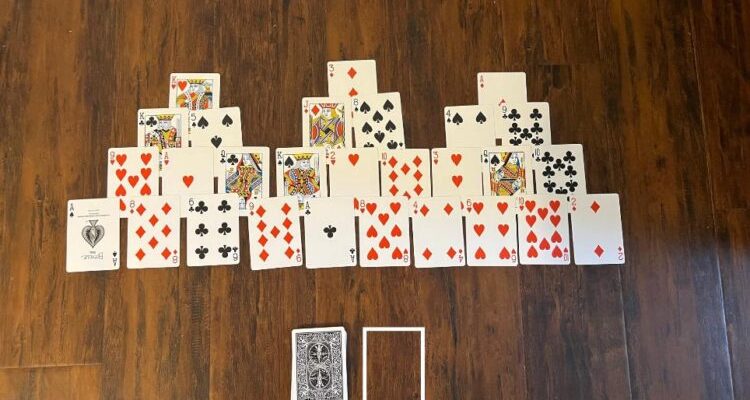
Solitary card games appeal directly to individuals who seek autonomy, internal control, and cognitive decompression. When a person sits down to play a single-player game, they enter a self-contained ecosystem where success or failure rests entirely on their own shoulders. There are no teammates to let down, no opponents trying to outmaneuver them, and no social pressure to perform at a specific speed.
-
Intrinsic Autonomy: Solitary players value complete control over the pacing of their activity. They can pause mid-game, abandon a losing deal without consequence, or spend twenty minutes analyzing a single move.
-
Cognitive Decompression: Single-player card games offer a low-stakes environment that allows the mind to enter a state of focused relaxation, acting as a mental palate cleanser after a long day of high-stress social interaction.
-
Problem-Solving Satisfaction: Solitary games function as spatial and logical puzzles. The dopamine hit comes from overcoming an adverse shuffle through tactical calculation and logical deduction.
The Appeal of Predictable Logic and Internal Mastery
For many minds, the primary allure of a solitary card game lies in its pure logic. Games played against a deck operate within a closed set of mathematical rules. While the shuffle introduces an element of random chance, the mechanics are entirely transparent.
This predictability fosters a deep sense of mastery. Solitary players enjoy tracking their win percentages, refining their personal strategies, and experiencing the quiet satisfaction of turning an unwinnable deck into a successful victory through sheer mental endurance. It is an internal dialogue between the player and the rules of the game, free from the chaotic variables introduced by human opponents.
The Social and Psychological Arena of Multiplayer Games
In stark contrast to the quiet introspection of solitary play, multiplayer card games are fundamentally social arenas. They attract minds that thrive on interpersonal dynamics, emotional reading, competitive drive, and collaborative problem-solving. In a multiplayer format, the cards in your hand are only half the battle; the other half consists of understanding the people sitting across from you.
-
Emotional and Behavioral Readership: Multiplayer games require constant psychological analysis. Players must evaluate opponent body language, betting patterns, table talk, and historical tendencies to anticipate moves.
-
Strategic Adaptability: Unlike a deck of cards, human opponents adapt. If you use the same strategy twice, a sharp adversary will counter it, forcing you to think multiple steps ahead and alter your approach mid-game.
-
Community and Shared Experience: Multiplayer card games build camaraderie, friendly rivalry, and a sense of shared community, fulfilling a deep psychological need for social connection and collective achievement.
Cognitive Differences in Risk Assessment and Decision Making
The cognitive architecture required to excel in solitary versus multiplayer card games differs significantly. Solitary players often exhibit high levels of patience, methodical planning, and risk mitigation. Because the opponent is a statistical probability rather than a thinking adversary, their decision-making process focuses on optimization and error reduction.
Multiplayer players, on the other hand, frequently display higher tolerance for ambiguity and psychological pressure. They must make split-second choices under imperfect information, knowing that their opponents are actively trying to deceive them. This environment favors minds that enjoy calculating risk-versus-reward ratios while simultaneously managing the emotional friction of competition. Whether cooperating in a trick-taking game like bridge or competing head-to-head in poker, multiplayer enthusiasts draw energy from the unpredictable nature of human behavior.
The Role of Introversion and Extroversion in Game Choice
While it is an oversimplification to state that introverts exclusively play solitaire and extroverts exclusively play multiplayer games, personality traits heavily influence these preferences. Introverted individuals often use solitary card games as a restorative practice, a way to enjoy cognitive stimulation without expending social energy. The solitary deck demands focus without demanding conversation.
Conversely, extroverted or socially energized minds often find solitary play underwhelming. For these individuals, the true value of a game lies in the interaction, the banter, the negotiation, and the shared narrative built around the table. The cards serve as a medium for human connection, turning a simple pasteboard rectangle into a tool for social bonding and competitive expression.
Frequently Asked Questions
Do solitary card games offer any measurable cognitive benefits for the brain?
Yes, solitary card games help improve working memory, pattern recognition, spatial reasoning, and strategic foresight while providing a low-stress mental workout that encourages focus and mental agility.
Why do some people find solitary card games boring over time?
Individuals who crave social interaction, dynamic feedback, and unpredictable challenges often find solitary games monotonous because the deck lacks the adaptability and emotional nuance of a human opponent.
Can playing multiplayer card games improve real-world social skills?
Multiplayer card games actively foster communication, emotional intelligence, negotiation tactics, and the ability to read non-verbal cues, all of which translate positively into professional and personal interactions.
Are digital versions of solitary card games as mentally engaging as physical decks?
Digital versions offer automated shuffling, quick pacing, and statistical tracking that enhance convenience, though some players prefer physical cards for the tactile sensory experience and screen-free relaxation.
How do cooperative multiplayer card games differ psychologically from competitive ones?
Cooperative card games foster team synergy, shared accountability, and collective problem-solving, whereas competitive games emphasize individual dominance, psychological bluffing, and zero-sum outcomes.
What personality traits are most commonly associated with fans of complex multiplayer trading card games?
Fans of complex trading card games often display high strategic curiosity, strong adaptability, a love for system optimization, and an appreciation for deep lore and custom deck-building mechanics.
Is it common for a single person to enjoy both solitary and multiplayer card games equally?
Many players appreciate both formats depending on their current mood, utilizing solitary games for quiet wind-down periods and multiplayer games when they seek social engagement and competitive stimulation.